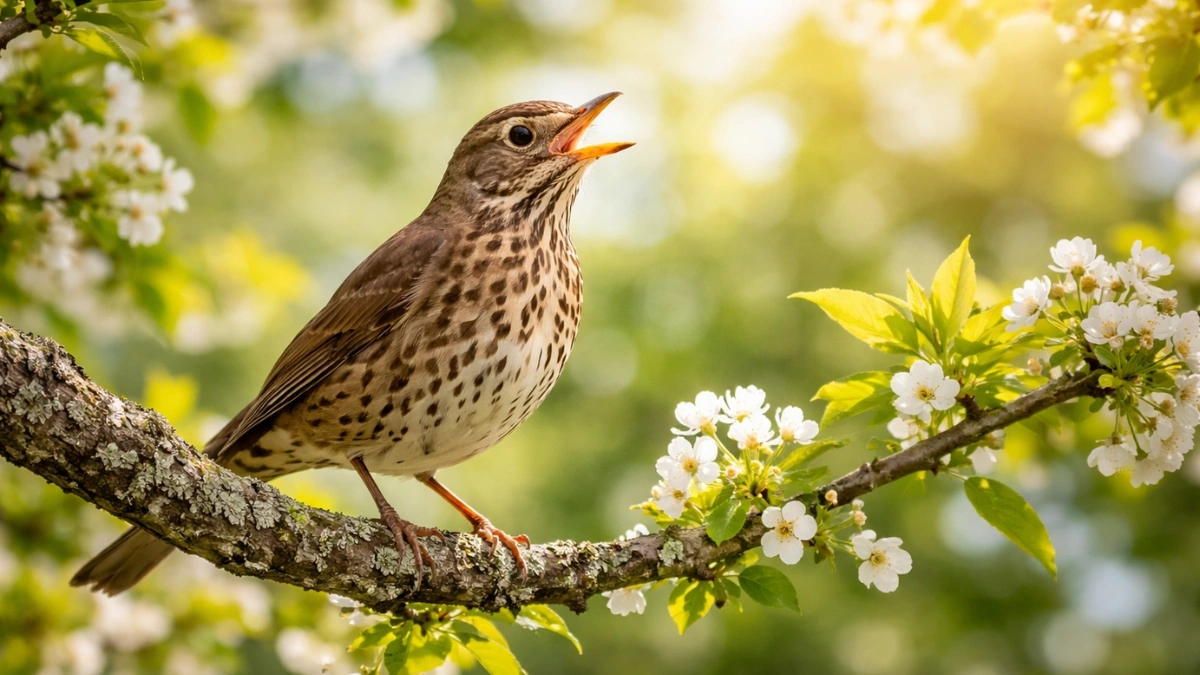
There’s something unmistakable about the sound.
Not loud, not demanding, but clear. A kind of layered melody that doesn’t feel random. If you’ve heard it in your garden, especially early in the morning or just before dusk, you’ve probably paused without meaning to.
That’s usually when people realize it’s a thrush.
And while it might seem like a small, ordinary moment, it often signals something quietly positive about your environment.
A Sign of a Healthy, Balanced Garden
Thrushes don’t settle just anywhere.
They’re selective in ways that aren’t immediately obvious. They look for spaces where the ecosystem is working well enough to support them. That means access to food, safe nesting areas, and a level of calm that allows them to stay.
If they’re singing in your garden, it usually means there’s balance.
Not perfection.
But enough natural stability for them to feel comfortable.
That includes things like soil health, plant diversity, and the presence of insects or worms they rely on for food. You might not notice those details directly, but the thrush does.
And its presence reflects that.
Why Their Song Matters More Than You Think
Thrushes don’t sing casually.
The song has purpose.
It’s often tied to territory, communication, and mating. But beyond that, it’s also an indicator of confidence. Birds tend to sing more freely in environments where they don’t feel constantly threatened.
So when you hear that steady, repeated melody, it suggests something simple.
They feel safe enough to be heard.
And that’s not something every environment provides.
The Subtle Impact on Your Garden’s Ecosystem
Their presence isn’t just symbolic.
It has practical effects too.
Thrushes help control insects and pests, often feeding on things that might otherwise damage plants. They’re part of a natural cycle that keeps things in balance without intervention.
You might not see them working.
But you’ll notice the result over time.
A garden that feels… steady.
Less disrupted.
More self-sustaining.
Why You Might Start Noticing Them More
Once you hear them, it becomes easier to recognize the pattern.
The timing.
The way the song repeats with slight variation.
The way it stands out without overpowering everything else.
And that awareness changes how you experience the space.
It’s no longer just background.
It becomes something you listen for.
Something that signals a kind of quiet continuity.
A Small Indicator of Something Larger
It’s easy to overlook.
A bird singing in a garden doesn’t seem like something significant.
But often, it points to something larger happening underneath.
An environment that supports life in small, consistent ways.
A space that isn’t just maintained, but functioning.
And in a world where so much feels controlled or artificial, that kind of natural presence stands out more than it used to.
The Part That Stays With You
Over time, the sound becomes familiar.
Not something you analyze.
Just something that’s there.
A quiet marker of the space you’re in.
And maybe that’s what makes it feel like a good sign.
Not because it guarantees anything.
But because it reflects something already working.
Something balanced enough to hold that sound.
And let it continue.